élő / (a)live
interactive multimedia installation
23. 01. 2026 – 22. 02. 2026
FUGA, Budapest
How can we capture life? How can we represent the volatile boundary that separates the living from the lifeless? What does it mean for the living to be present, thereby inscribing itself into the presence of many other living beings? What kind of interconnection exists between them? How do they perceive each other, how do they interact? What can humans perceive, for example, from a plant? And what can plants perceive from humans? How does their entanglement become a liveliness in which life itself is revealed (Michel Henry)? But can we record life, can we grasp it without immediately rectifying it, turning it into a corpse; and without cutting up the pulsating continuity into lifeless fragments?
The exhibition aims to convey not by grasping, but by perceiving the experience of interpenetration, in the language of the mediatized world: through photos, videos, and live broadcasts. blanche the vidiot offers not theoretical statements, but sensually experiential philosophical and ecological ideas, primarily addressing the ethically motivated problem of what it means to consider plants, and indeed the living world, at all.
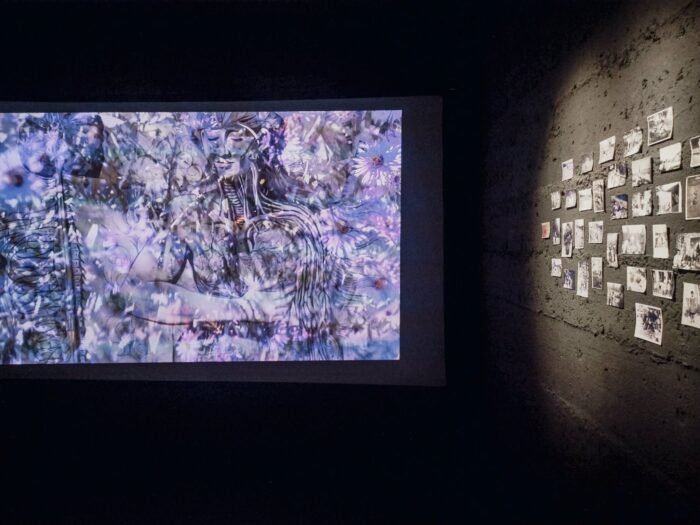
In the exhibition space furnished with multimedia installations, various media, devices, signs, and semiotic systems are layered on top of each other, thus becoming hyperbolic. There is no logical, temporal, or spatial coherence between the scenes (still images, moving images, live images) organized from momentary impressions, memories, and sensations, but only spontaneous parallels, analogies, and associations. Even within a single image, we see proliferation, the excesses of intertwining, but it is precisely this that makes the totality organized from visual and audio signals so pulsating and lifelike, that nothing can be separated and grasped—we perceive a flood, an endless process. The sensations are not fixed, but simply present: the sounds generated by synthesizers and the images produced by technical media draw the viewer into a meditative state of presence.
the three video channels
Stream of life / live stream
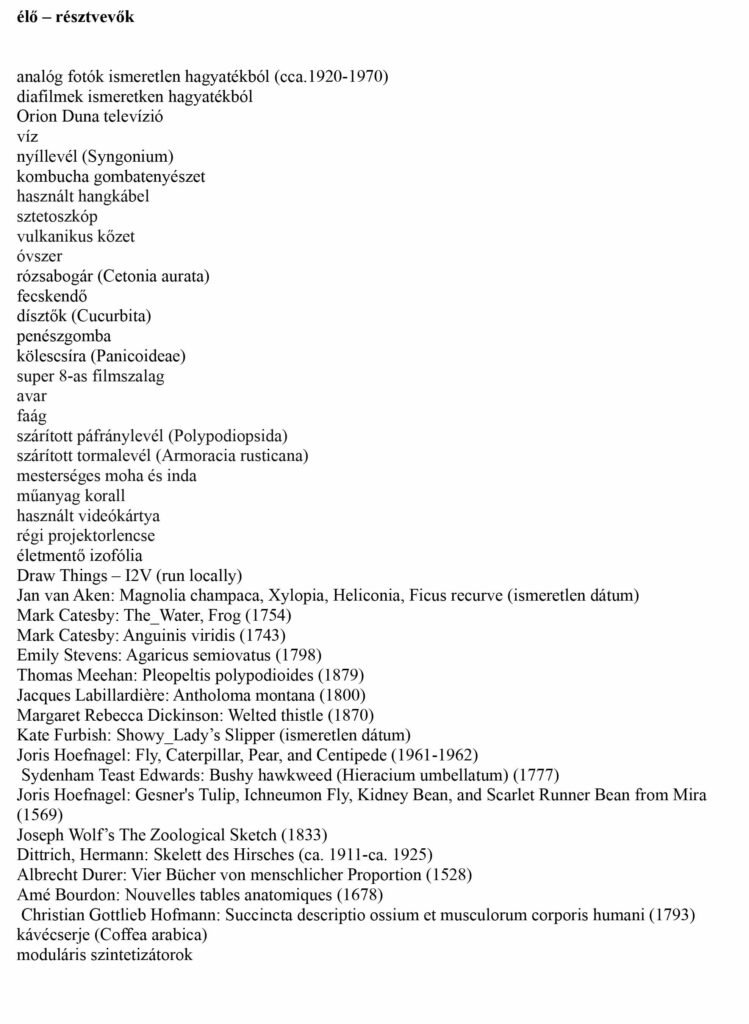
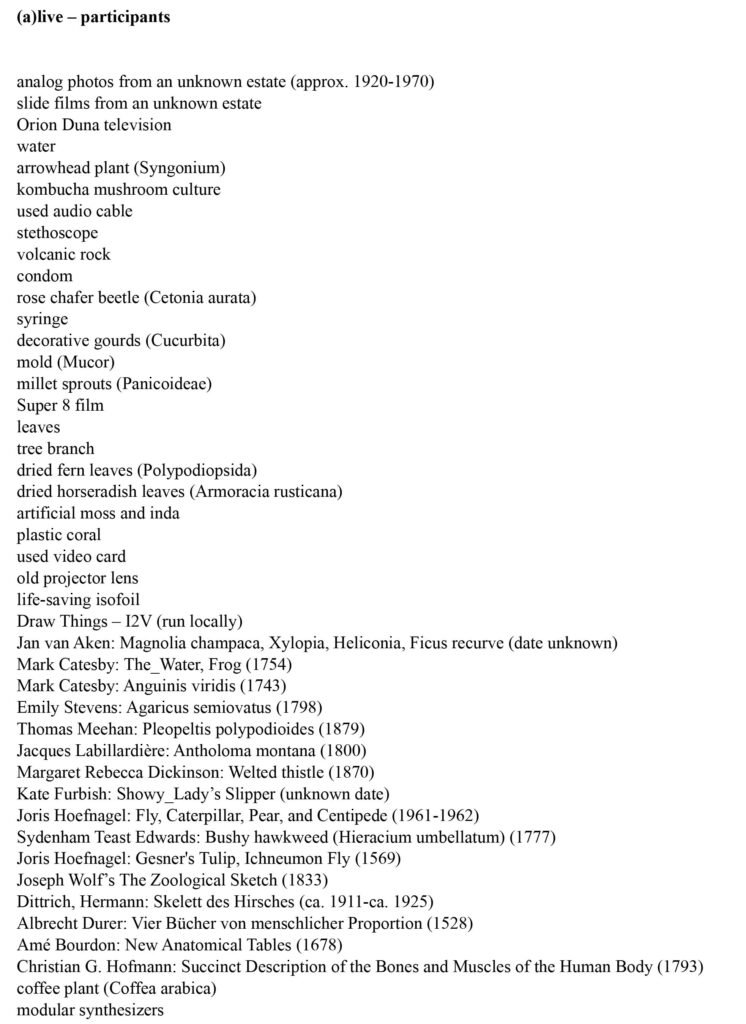
The concept of “living” refers not only to the problem of organic life, but also to the way in which a content or an object can be present throughout an exhibition. A significant portion of the videos and still images are technically produced recordings of living beings (mainly plants). The recordings are lifeless; the content represented by the recordings also are. But all the beings (the various plants) in the diorama, i.e., the “gutted” television, are alive. The living plants, just like the visitors to the exhibition, “listen” to the music, “see” the images and films, and perceive the people. However, the real-time plant broadcast from the artists’ apartment in Debrecen may not be able to evoke a sense of presence, just as still images are unable to do so. Although the artists animated the old photos and graphics featured in the exhibition in multiple layers, moved them, and “brought them to life” with AI animation: they projected them onto canvas and walls and sent them to TVs; they conjured moving images from still images—yet they still seem dead. But they are dead in a different way than the still images that can be viewed in their original, motionless form at the exhibition. The film’s visual content is alive in a way: on the one hand, in an haonthological sense, resurrected from the dead, as they have been reanimated; on the other hand, they wander, the still images transition into video strips and appear as movement on projectors and displays.
The sensor-equipped houseplant installed in the artist couple’s home in Debrecen will be “alive” for the entire duration of the exhibition. blanche the vidiot streams a video of it and the music track it creates – live, as a co-creator – to the FUGA’s space; and, with the help of a webcam, signals are transmitted in the other direction during the exhibition: from FUGA to the sensor-equipped plant at home. The transmission from the apartment in Debrecen and the AV also influence each other, creating interaction, with feedback loops organizing what each participant sees. This is because not only is the plant’s live stream displayed in the exhibition space, but the artists also use tracking software to send control signals to the synthesizers and music editor at home based on the face of the person watching it (the data will not be recorded, of course!). Thus, human reactions to the streamed image of the plant will partly determine what the viewer and the sensor-equipped houseplant hear, as the plant also hears the music playing inside. A reciprocity is created in the mutual perception of plants and humans. The plant is in a feedback loop with the AV content, as it partly controls it (with sensors), and since it also reacts to the sound, the AV has an effect on it, too. The living houseplant is not physically present at the exhibition, yet it affects the audience, just as the audience’s reflections affect the plant itself.
In addition, there is also an audio track (in the plant live stream) that is ‘alive’ yet in another sense: a so-called Krell patch is a synthesizer sound that always sounds different (also through a feedback loop) because it generates different rhythms and sounds in a (quasi) autonomous manner. In other words, it is ‘alive’ because it ‘runs indeterminately’ after the initial parameters have been set manually.
Visitors can also interact with the exhibition ‘live’ by projecting onto the video track using an overhead projector. This means that they are not passive recipients, but actively participate on a reciprocal basis.
Gerda Széplaky (curator)
recorded excerpt from live broadcast
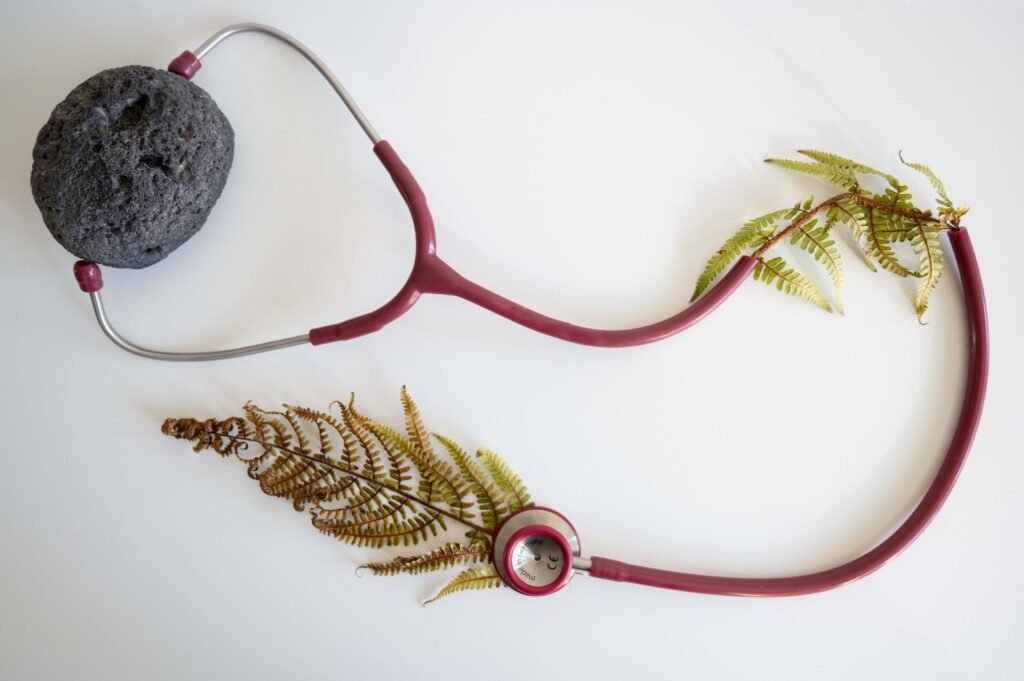
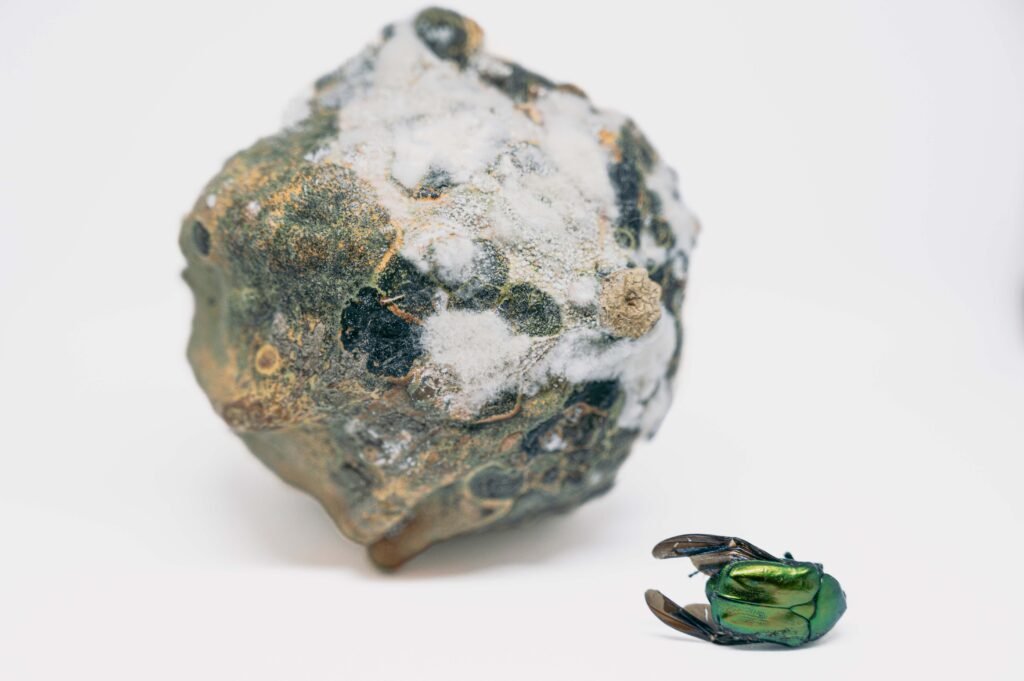
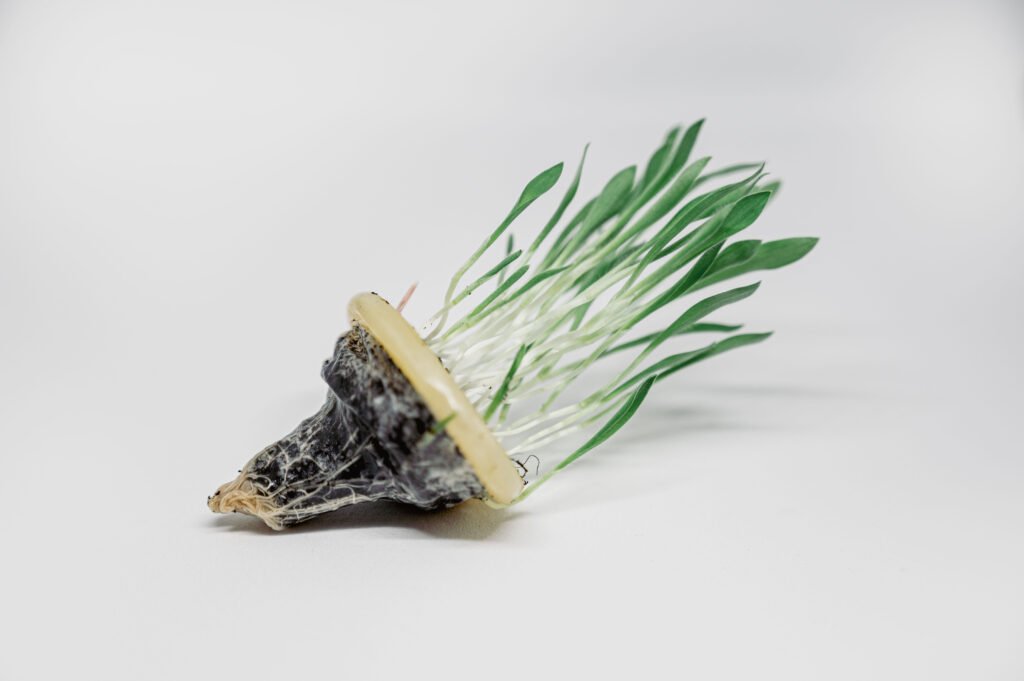
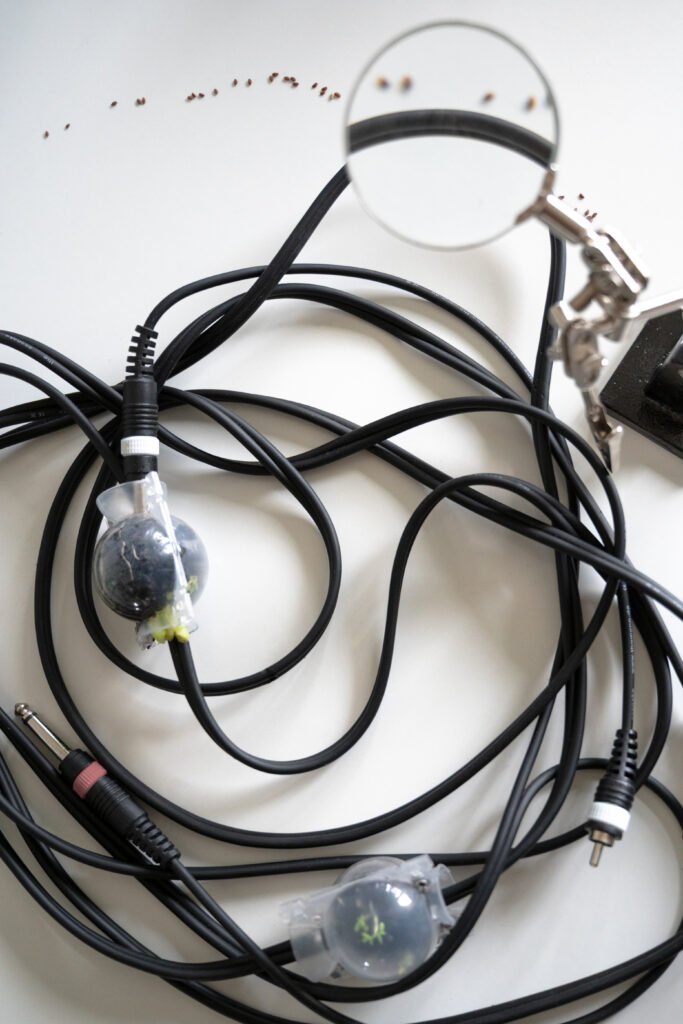
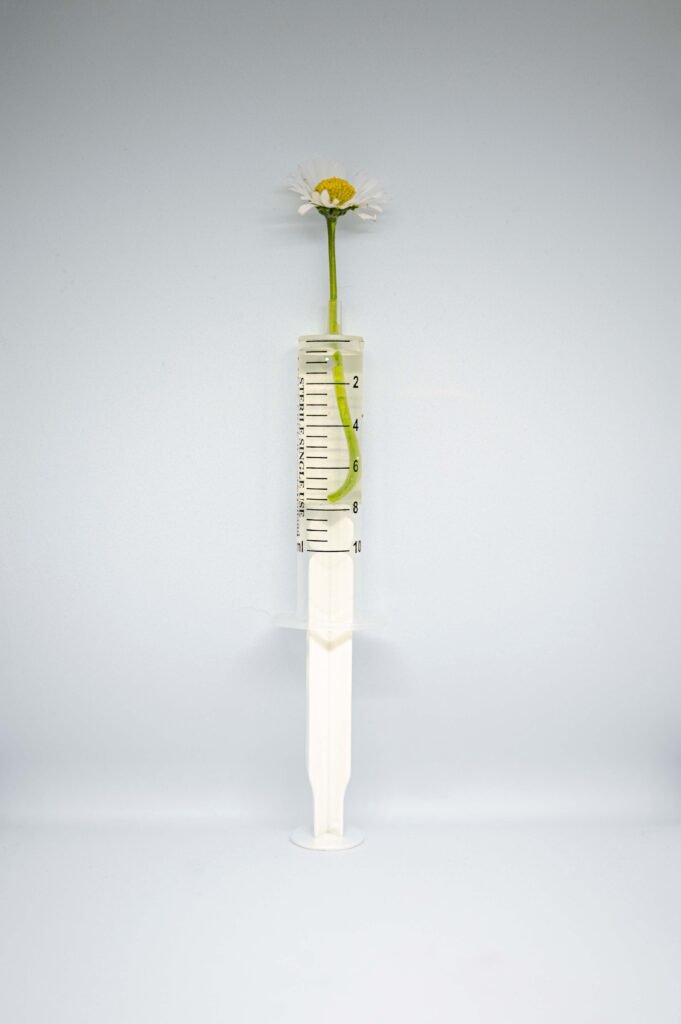
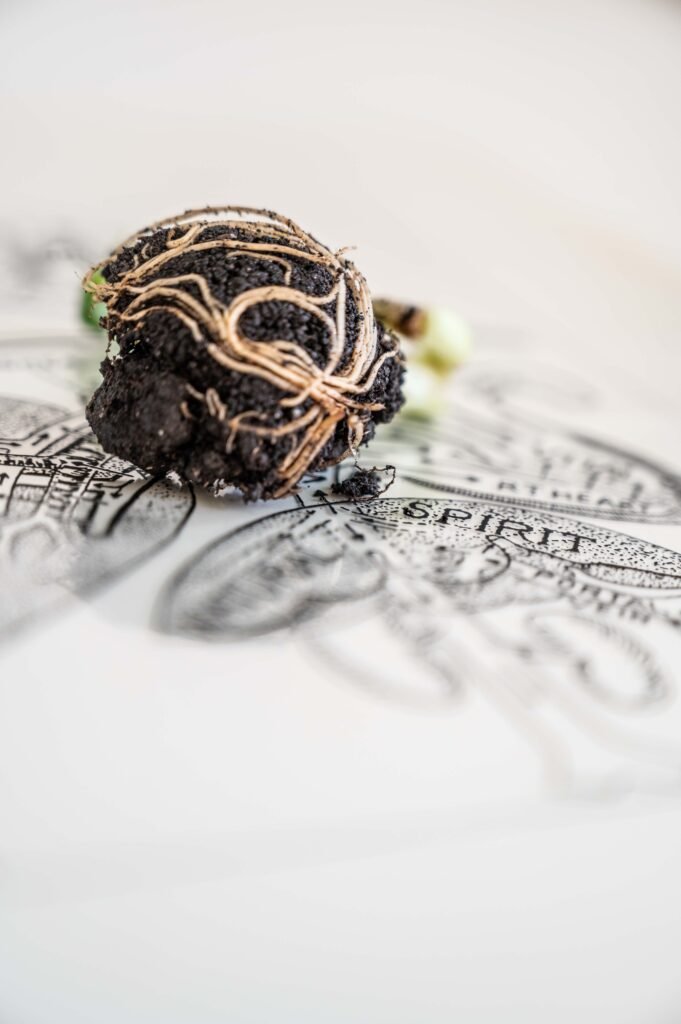
mounted giclée photos (2 x 390 x 590 mm, 1 x 590 x 390 mm, 2 x 590 x 400 mm, 1 x 400 x 590 mm)


interiors from the exhibition
exhibition opening
finissage documentation